
Morton’s Neuroma & Bursitis
At our Woolloongabba clinic, our podiatrists see Morton’s neuroma (also called interdigital or intermetatarsal neuroma) and forefoot bursitis almost daily. Morton's neuroma is an injury affecting the nerves that run between the metatarsals (long bones in the forefoot). It most commonly affects the nerve between the 3rd and 4th metatarsal bones, although can occur between any intermetatarsal space. A neuroma is usually caused by compression and pressure on the nerve from tight footwear or abnormal pressure, which causes the usually thin nerve to thicken and become inflamed. Often, a neuroma canbe accompanied by swelling of a small sack of fluid next to the affected nerve (the intermetatarsal bursa), causing bursitis to occur. Other times, there may be no neuroma present, but a intermetatarsal bursitis occurs on its own. The bursitis then puts pressure on the nerve tissue to create symptoms which feel very similar to a neuroma. Sometimes, a combination of these two problems creates a condition known as a neuroma-bursa complex. |

What are the symptoms?
The most common symptom of neuroma or bursitis is discrete burning pain in the ball of the foot just behind the toes. It is usually aggravated by walking or wearing tight-fitting, or high heeled shoes. Usually this is behind the region of the 3rd and 4th toes. The discomfort may be relieved by rest or wearing cushioned loose fitting footwear. Patients may variously describe burning, stabbing or tingling sensations under the middle of the forefoot, that can often radiate into the toes.
Sometimes a sensation of walking on a small lump or ball under the foot is experienced when a neuroma is present. |
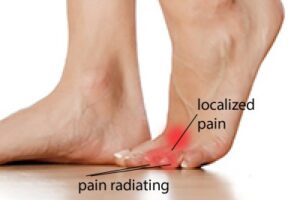
How do we diagnose Mortons neuroma or intermetatarsal bursitis?
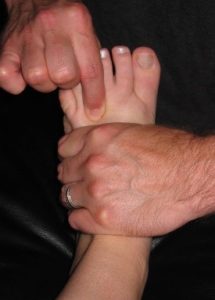
Diagnosis can typically be made through taking a thorough history and clinical examination. The most common clinical symptoms were tenderness on direct palpation and pain on weight bearing which was relieved by rest. The most sensitive clinical sign is 'Mulder’s sign'. As demonstrated in the picture below it involves compressing the forefoot and palpating just below the toes to reproduce the sharp, shooting pains.
The most accurate way to confirm a neuroma is through diagnostic imaging, such as ultrasound scans or MRI.
Morton’s neuroma can often be found concurrently with an intermetatarsal bursitis. When both a neuroma and bursitis are present at the same time the condition is known as a neuroma-bursa complex. Sometimes the pain is not located between the metatarsals, but directly underneath the metatarsal heads and associated MTP joint. In these circumstances, there is a high liklihood that a plantar plate ligament injury is the cause of the pain. Usually an ultrasound or MRI will differentiate between the two. |
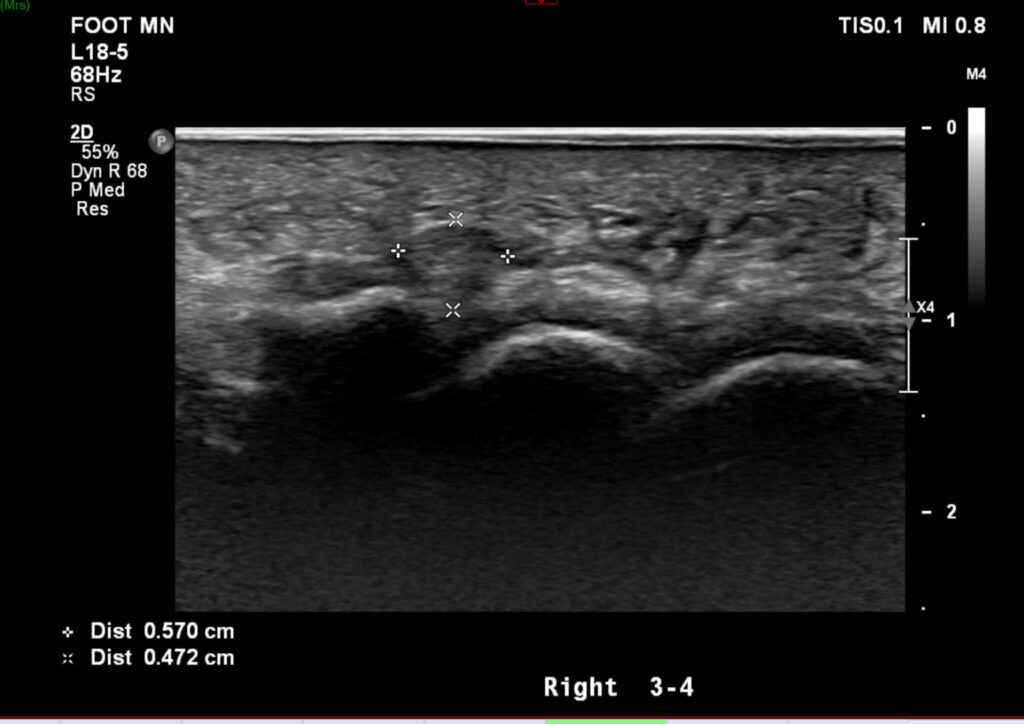
How do you treat Morton's neuroma or intermetatarsal bursitis?
If you have forefoot pain, and radiating, shooting pains into one of your lesser toes, come and see us for an assessment. Its likely there could be a neuroma or bursitis as the cause.
Common non-operative treatment strategies include:
- Advice and education on appropriate footwear to avoid compression and pressure on the neuroma
- In-shoe metatarsal supports, or foot orthoses to take pressure off the neuroma site, and address any mechanical or functional issues contributing to the condition

- Anti-inflammatory medications (if appropriate), icing activity modification, and rest for symptom management
- Injection therapy such as local corticosteroid medications mixed with local anaesthetic, or prolotherapy
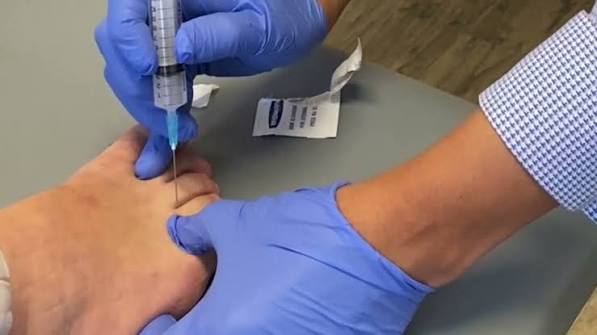
In some instances if non-operative management fails, surgical removal of the neuroma and/or associated bursa may be required.
Following a comprehensive assessment of your symptoms, foot shape and function, our Podiatrists will discuss the treatment options best suited to you. They may recommend and refer you for an ultrasound scan or MRI scan if there any doubts about the nature of the problem.
Schedule Your Forefoot Assessment
Our Brisbane Podiatrists are experienced in diagnosing and treating Morton’s neuroma. Book a comprehensive assessment today, and we will tailor a treatment plan, including custom orthotics or cortisone injections, to effectively manage your forefoot pain.
Call us on 07 3319 3900
Or