
How do cracked heels & fissures happen?
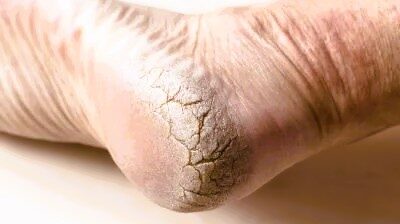
Dry, cracked heels and fissures are a common complaint our podiatrists see at our Woolloongabba clinic.
Developing cracked heels can be unsightly, but also a painful condition, especially if they become deep, and lead to bleeding.
They are usually the result of being barefoot a lot, or wearing open, strappy shoes or thongs for weight bearing activities. If you tend to be a heavy 'heel striker' then there will be a tendency to develop quite thickened callused skin under your heels and around the periphery. When this becomes too thick and the skin dries out, it can be very prone to developing cracks and fissures.
Many people find the appearance of significant callusing cracking under and around their heels to be cosmetically undesirable.
But not only can cracked heels be unsightly, if they worsen they can be quite painful and even prone to infection. If the skin thickens too much around the heel, very deep fissures can occur, and if left untreated they can sometimes bleed and be very uncomfortable. If you have a condition like diabetes, this could also lead to serious infections which have actually landed more than one of our patients in hospital on intravenous antibiotics.
Cracked Heels Treatments
The patients that we see with cracked heels are always surprised at how fast we can help them too. During one standard consultation, one of our podiatrists will remove the thickened and callused skin from your heels using a combination of manual and machine debridement, and give you advice on how to prevent cracked heels occurring again. We often recommend periodic treatment, particularly over summer months when open shoes are worn the most, to keep the clinical appearance of the skin in top condition.
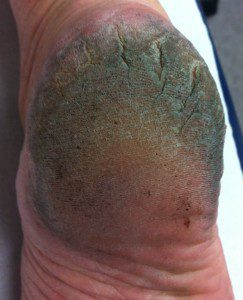
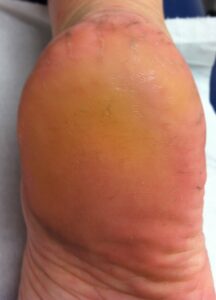
Home based care to prevent cracked heels
If you are prone to developing painful or unsightly cracked heels, there are some simple things you can do to assist this problem.
- Avoid excessive barefoot activity, and try to wear an enclosed shoe ideally with a sock for higher level activities or sports. This may be more frequently practical for men than women.
- Regular and consistent use of a keratolytic foot cream, that has a significant strength of an active ingredient such as glycolic acid/AHA, or urea to help soften the hard callusing
- Regular use of a foot file or pumice stone after a shower or a warm foot soak to manually exfoliate the build up of hard callusing
If the degree of callusing and cracking becomes unmanageable, then please make a time to see one of our expert podiatrists for quick and painless removal of this abnormal skin back to its normal thickness and appearance.