
Heel Pain & Plantar Fasciitis
If you are located in Brisbane and affected by persistent heel pain, our podiatrists can assist you at our Woolloongabba clinic.
Heel pain is a very common foot complaint that affects both men and women, regardless of age, activity or occupation. However, it becomes far more common in people over 40, as their connective tissues stiffen and become less flexible.
Heel pain can also occur in children, but is usually due to an injury to the growth plate called Sever's disease.
Heel pain can encompass a range of conditions and causes, and successful treatment requires a thorough knowledge of all these issues.
Many older adults with heel pain might discover they have a bone spur present under the heel. This is often easily seen on an x-ray. 'Heel spurs' are actually almost never the cause of the heel pain, and more likely to have developed due to tightness in the muscles in the arch of the foot. Be reassured that it is very uncommon for heel spurs to be a contributor to actual heel pain.
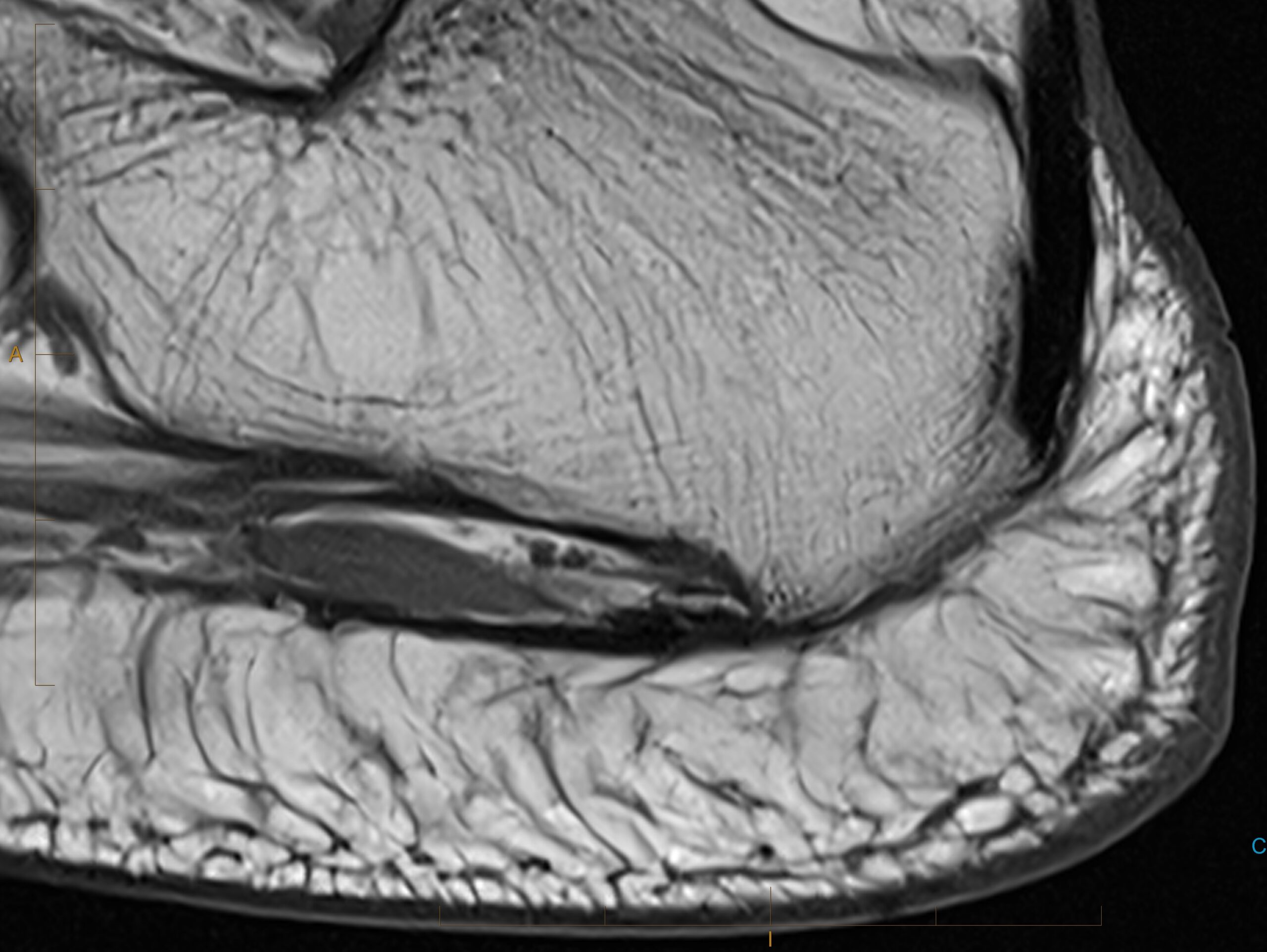
The most common cause for heel pain is plantar fasciitis. Plantar fasciitis is an inflammation of a band of tissue (called the plantar fascia) in the arch of the foot that inserts into the bottom of heel bone (calcaneus).
When inflamed, plantar fasciitis causes pain when getting out of bed in the morning, and may recur through the day when getting up from a seated position or rest. Often patients described the feeling of a ‘stone bruise’ under the heel.
When it's NOT plantar fasciitis
Sometimes pain under the heel is not due to plantar fasciitis. One example is injury to the heel bone from conditions like a stress fracture (especially if you have bone density problems like osteoporosis).
Another example is a deficit with the normal structure and integrity of the thick pad of fatty tissue under the heel (known as plantar heel fat pad syndrome).
Rarely, some forms of inflammatory arthritis (like rheumatoid arthritis) can also mimic plantar fasciitis.
Causes and Diagnosis
Successful treatment hinges on an accurate diagnosis, as heel pain can mimic other conditions. Beyond plantar fasciitis, causes of heel pain include:
- nerve entrapments (like Baxter’s neuritis)
- various arthritic conditions (eg psoriatic arthritis)
- plantar heel fat pad syndrome
- stress fractures of the heel bone (calcaneus)
- pain referred from spinal problems such as lumbosacral nerve root impingement, facet joint arthritis or sciatica
Your podiatrist will conduct a thorough examination and history review to determine the exact cause, and may recommend an x-ray or ultrasound scan to investigate further.
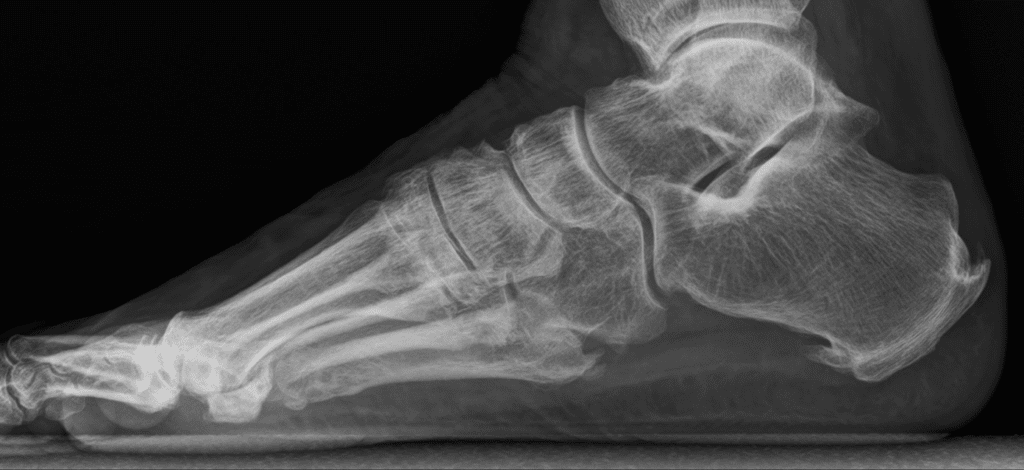
Heel spurs seen on x-ray at the bottom and rear parts of the heel bone.
Effective Treatment Strategies for Plantar Fasciitis
Most causes of heel pain are easily managed with simple treatments, and rarely require injections or surgery. Please feel free to contact us to make an appointment with one of our podiatrists if you are suffering from chronic or acute heel pain.
Often we will recommend:
- a stretching program,
- taping,
- avoidance of bare-foot activity,
- orthotics and supportive footwear changes.
- radial shockwave therapy, or
- a corticosteroid injection is symptoms are proving difficult to settle
- a removable cast walker (moon boot) for stubborn or chronic cases

Most people will respond to these conservative measures, however some may require an injection in the heel to help with the pain, or in the very worst cases may require an operation to release part of the fascia.
Recovery Timeline
We generally advise that the longer the problem has been present, the longer it takes to go away.

If we see an acute case that has only been painful for a couple of weeks, then it will usually resolve very quickly with appropriate care – often within a week or two. However, if the pain has been present for a year or longer and has become chronic, it may take several months, and a wide variety of treatment approaches to settle the symptoms. Sometimes plantar fasciitis can eventually go away on its own, and ‘burn out’.
Reviewed by:
Anthony Short MPod, BAppSc(Pod), FFPM RCPS(Glasg)
Podiatrist
AHPRA Registration No.: POD0001394822
Clinical review date: August 2026
Take Control of Your Heel Pain
Stop suffering from chronic or acute heel pain. Contact our Brisbane Podiatrists today to book your comprehensive assessment and begin the path to effective, long-lasting relief.