
Understanding Metatarsus Adductus
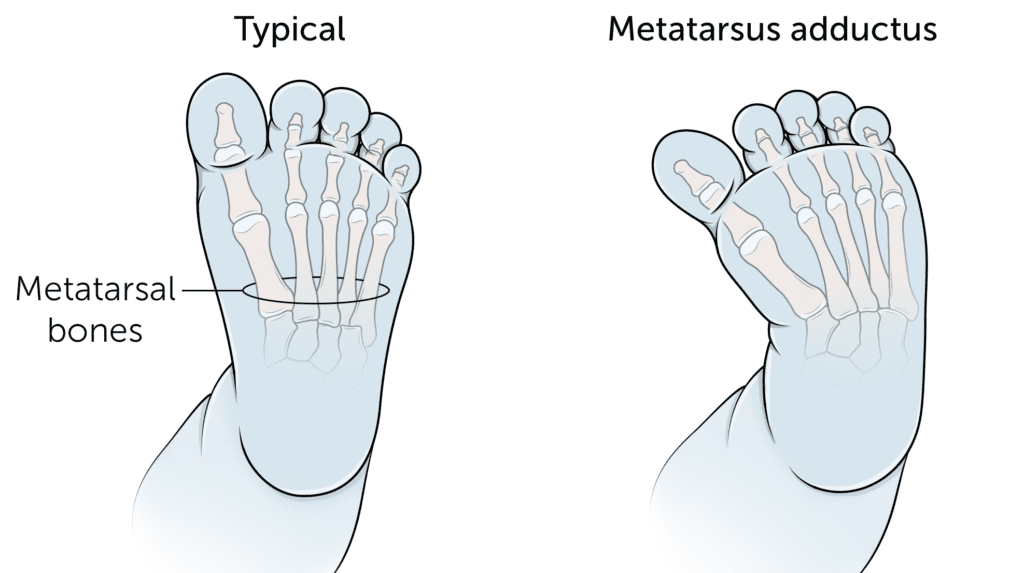
Metatarsus adductus (or varus) is a common foot deformity, often noticed at birth, where the forefoot points inward compared to the rearfoot, creating a characteristic 'kidney-shaped' foot. Unlike clubfoot, the ankle remains normal, but the inner foot border appears concave with a wide gap between the first and second toes. Undiagnosed cases may later present as an in-toed gait.

Causes and Risk Factors
The exact cause remains unclear, but factors include genetic predisposition, muscle imbalances, and soft tissue contractions. Environmental factors like the baby's position in the uterus or sleeping position, stunted foot development in utero, and abnormal muscle insertions have been suggested. It is also linked with developmental dysplasia of the hip (DDH).
Severity and Treatment Timing
Metatarsus adductus varies in severity: it can be flexible (correctable by hand), semirigid, or rigid. Treatment success is highly dependent on early intervention; it is crucial to begin treatment before the child starts walking (under 12 months). The most acknowledged early treatment is serial plaster casting, changed over 1 to 3 months, as likelihood of success decreases significantly after weight-bearing commences.
Treatment Options Available
Treatment choice depends on the child's age, severity, rigidity, and compliance. Options range from parental manipulation and stretching to specialized serial casting, splints/braces, padded shoes, and altering sleeping positions. Surgical correction is reserved for the most severe cases or those unresponsive to conservative care.
Reviewed by:
Anthony Short MPod, BAppSc(Pod), FFPM RCPS(Glasg)
Podiatrist
AHPRA Registration No.: POD0001394822
Clinical review date: August 2026
Schedule Your Child's Assessment Today
Early intervention is critical for many childhood foot conditions. Book a consultation with our friendly and caring Brisbane podiatrists today to discuss timely assessment and treatment options.
Call Us : 07 3391 3900
Or