
Big Toe Joint Pain
Pain and deformity frequently often occur in the big toe joint - otherwise known as the first metatarsophalangeal (1st MTP) joint, or the ball of the foot. Careful assessment is necessary to accurately determine the true nature of these complaints, as they care be many and varied, and often subtle differences can exist between differing conditions.
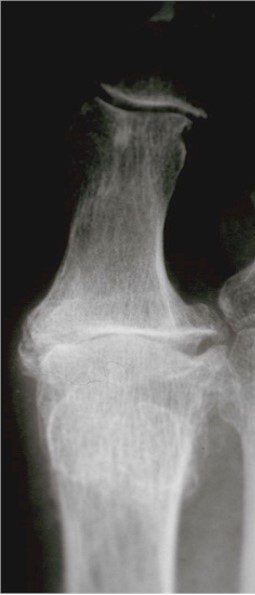
Hallux Limitus and Rigidus
When osteoarthritis occurs in the 1st MTP joint, it is known as hallux limitus or hallux rigidus, depending on the severity of the disease affecting the joint. This joint is one of the most commonly affected joints in the body to develop osteoarthritis, usually secondary to mechanical overuse, previous trauma, or a genetic predisposition towards osteoarthritis.
Treatment is usually directed as trying to preserve the cartilage located within the joint, in order to reduce discomfort and delay or prevent the need for surgery. Often foot orthoses and footwear modifications are used to manage hallux rigidus or hallux limitus, along with medications and activity modification. Severe arthritis and pain in the joint may often be an indication for surgery, which may involve reducing the spurs and excessive bone growth around the joint, or stiffening the joint permanently using pins or screws.
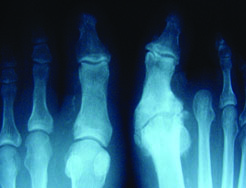
Hallux Valgus (Bunion)
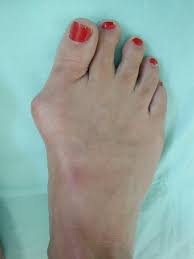
A common deformity affecting the big toe joint is hallux valgus, also known as a bunion joint or bunions.
Hallux valgus can be due to genetic predisposition, mechanical factors and is often aggrevated by poorly designed or fitting footwear. The appearance of a bump on the side of the big toe joint is due to a slow subluxation of the 1st MTP joint, and gradual misalignment of the big toe with the 1st metatarsal bone.
Over time, this has a tendency to cause uneven wear and tear of the cartilage within the joint. This can eventually lead towards osteoarthritis. However some people can be lucky enough to get considerable deformity of this joint without any pain or symptoms. Though fitting the foot within regular footwear does become increasingly difficult.
Treatments include specialised footwear modifcations, foot orthoses (or orthotics), splints, and toe spacers. patients to live with the problem in inproved comfort, though surgery is usually the only way to correct the joint back into its appropriate position and alignment.
Gout
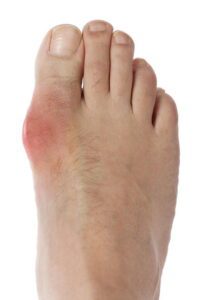
Gout is a metabolic disease caused by an accumulation of uric acid crystals, and classically affects the 'big toe' joint - though can affect almost any joint in the body. A gout attack can be extremely painful, and result in a swollen, red joint which is exquisitely painful to move or touch.
It is thought that gout tends to affect the foot more than elsewhere due to the lower temperature and distance from the heart, which allows uric acids to precipitate more easily.
Gout can be caused by strong hereditary/genetic factors, but is generally associated with a diet high in purines (eg seafood, game meats, high fructose sweets) and alcohol intake - the so-called "beer and pizza" disease.
Sesamoiditis
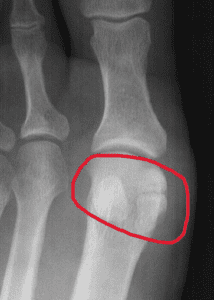
The sesamoid bones are (typically) two small bones that sit within a tendon under the big toe joint. They assist in propulsion of your body forwards when walking and running by assisting the big toe to push-off with each step.
However, they can be prone to injury and may become inflamed or even develop fractures. This is more common in foot types that naturally lead to increased weight-bearing pressure under the big toe joint. It is also more likely with sports that involve a lot of jumping or pressure throught the front of the foot, like basketball and netball.
In rare instances, untreated sesamoid bone injuries can lead to a condition known as avascular necrosis, where the bone can die due to interruption of the normal blood supply. When treated early with orthotics and footwear modifications, the pain is usually easy to resolve and recurrences can be prevented long term so you can continue to enjoy your physical activities.
See Us For Foot Pain Relief Today
If you are experiencing pain or deformity in your big toe joint, consult with our experienced Podiatrists. Book your comprehensive assessment now to discuss the best treatment path for your bunion deformity, or arthritic joint pain now via our online booking system.