
Peripheral Neuropathy And How It Affects Feet
What is peripheral neuropathy?
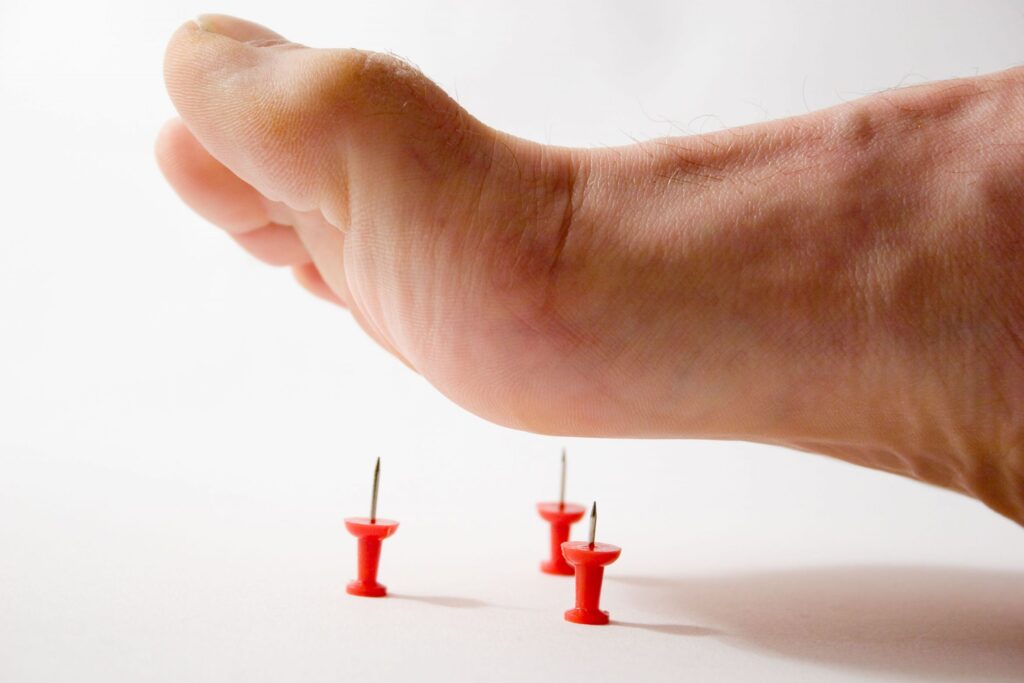
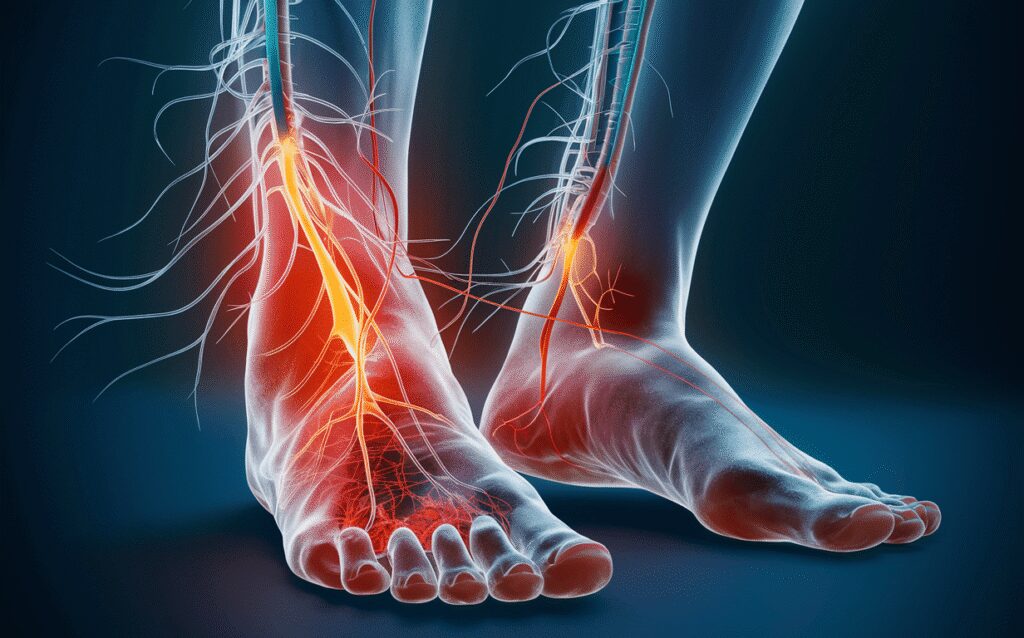
Peripheral neuropathy is a condition in which nerves in the peripheral nervous system are damaged. The peripheral nervous system encompasses the nerves outside of the brain and spinal cord.
There are three types of nerves in the peripheral nervous system:
● Motor nerves control the movement of all muscles under conscious control, such as
those used for walking, grasping things, or talking.
● Sensory nerves transmit information such as the feeling of a light touch, temperature, or
the pain from a cut.
● Autonomic nerves control organs to regulate activities that people do not control consciously, such as breathing, digesting food, and heart and gland functions.
Most types of neuropathy affect all three types of nerve fibres to varying degrees; others primarily affect one or two types.
Nerve function in neuropathy is disrupted in three ways:
● Loss of signals normally sent (like a broken wire)
● Inappropriate signaling when there shouldn’t be any (like static on a telephone line)
● Errors that distort the messages being sent (like a wavy television picture)
What are the symptoms of peripheral neuropathy?
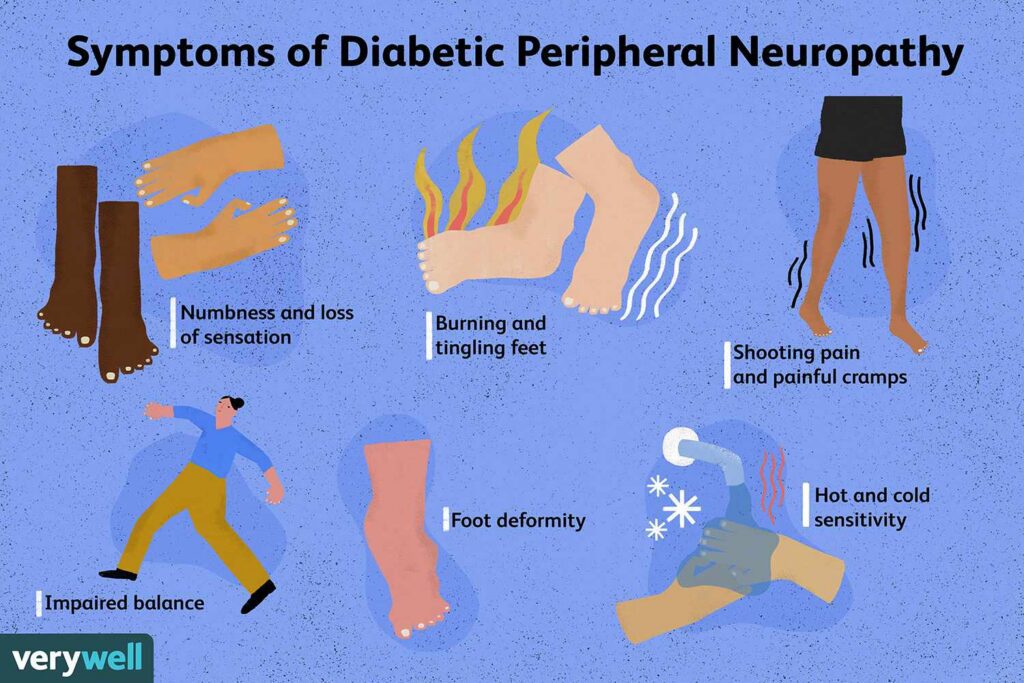
As the name suggests, the first symptoms of peripheral neuropathy often show in the feet.
- Common symptoms include:
numbness, tingling or ‘pins and needles’ sensations - Burning
- A sensation of having a stocking on
- A heavy sensation in the feet, ‘feel like blocks of wood’
- Muscle weakness and wasting
- Change in foot shape
- Loss of reflexes
Sometimes peripheral neuropathy is completely asymptomatic, and is picked up as an incidental finding during routine foot health testing.
What causes peripheral neuropathy?
There are many causes of peripheral neuropathy, with the leading cause worldwide now being diabetes (both Type 1 and 2).
- Other causes include:
B12 deficiency - Alcoholism
- Chemotherapy medictions
- Auto-immune disease which attacks the nervous system (such as Guillain-Barre syndrome)
- Physical injury. including injury to the spinal cord
- Circulation problems
- Hormonal imbalances
- Exposure to toxins which damage the nerves
- Infections
- Tumours and cancer
Peripheral neuropathy can also be ‘idiopathic’ - meaning there is no known cause for the issue.
It can also be part of an inherited genetic condition (such as Charcot-Marie-Tooth disease).
How is peripheral neuropathy diagnosed?
Given peripheral neuropathy mostly starts in the feet, podiatrists are often one of the first practitioners to diagnose the problem. Podiatrists are attuned to the symptoms of neuropathy, which patients will often report incidentally. It is also a common finding from routine diabetic foot health assessments.
After taking a detailed history of your symptoms, medical conditions and medications, your podiatrist will perform some simple diagnostic tests to measure your levels of:
- Sensation (light touch and vibration)
- Motor function (reflexes, muscle tone, foot structure, and gait function)
- Circulation and skin integrity
Assessment and management of peripheral neuropathy is multi-disciplinary, and if there is no
clear cause for the development of neuropathy (such as diabetes), your podiatrist may suggest you get some blood tests.
Where further assessment is required, you may need to also see a nerve specialist (neurologist) for nerve conduction testing, or another specialist to help control the underlying disease (such as an
endocrinologist to help manage diabetes).
How is peripheral neuropathy treated?
Treatment for peripheral neuropathy depends on the type of nerve damage that has occurred
(eg sensory or motor), where it is located, and what symptoms are present.
The key to treating all peripheral neuropathy is addressing the underlying cause, for example gaining better control of your blood sugar levels, or reducing alcohol intake.
Your GP will play a key role in helping you navigate this step:
- Medications are available for relief of symptoms in painful peripheral neuropathy, which
can work by reducing unhealthy nerve signals (such as those that cause excess 'burning pains) - Sometimes, other less common treatments such as transcutaneous electrical nerve stimulation (TENS), local anaesthetics, and surgery may be used.
In some cases, the above treatments may allow the peripheral neuropathy to resolve. However, more often than not, peripheral neuropathy is not reversible, and therefore must
be managed as a life-long condition. Many of the ‘secondary effects’ of peripheral neuropathy occur in the feet, which is why podiatrists play an important role in the management of this condition.
Foot problems in peripheral neuropathy
Loss of nerve sensation and function in the feet can lead to several major foot problems. These
include:
- Injury to the foot without the patient being aware (such as cut, burn, or foreign body)
- Change in the foot structure due to muscle weakness and wastage, causing clawing of the toes
- Increased ‘pressure areas’ under the foot and on top of the toes, causing build up of
hard skin and if not treated, ulceration - Loss of balance with standing and walking
- Persistent burning sensations
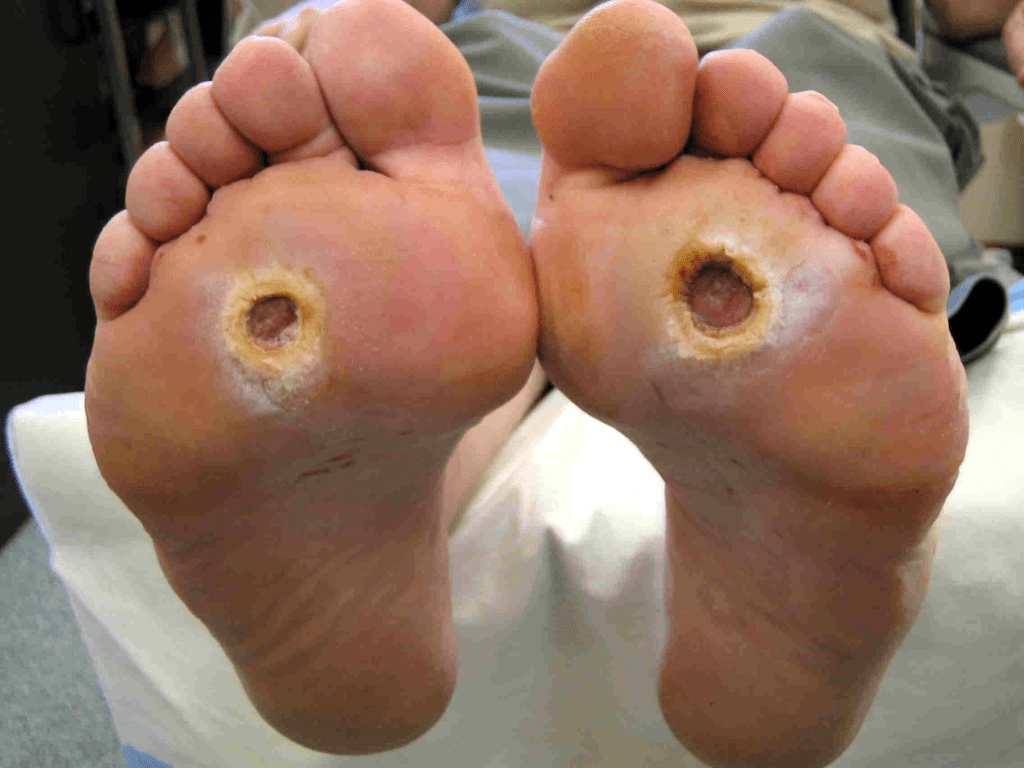
Foot ulcers under each foot due to peripheral neuropathy
Podiatry treatment in peripheral neuropathy
The role of podiatry is incredibly important in the management of peripheral neuropathy. Your podiatrist will:
- Assess the level and type of peripheral neuropathy
- Monitor for progression or secondary issues
- Provide advice and strategies for preventing secondary problems
- Treat secondary and acute problems (such as ulcers) if they arise
- Communicate and work with your GP and specialists involved in your care
Common podiatry treatments for peripheral neuropathy include:
- Debriding hard and thickened skin (callus)
- Prescribing safe footwear
- Fitting orthotics to reduce pressure spots and manage gait changes from peripheral
neuropathy (including poor balance) - Acute wound care and ulcer management, if required
If you have peripheral neuropathy, it is important to see your podiatrist at minimum once every 6 months.
Preventing foot problems with peripheral neuropathy - Podiatrist Tips
There are several simple things you can do each day to reduce your risk of foot problems with peripheral neuropathy:
1. Check your feet each day including the soles of the feet and in between the toes. Use a mirror or have someone help you if required. You are looking for cuts, blisters, breaks in the skin, discolouration, or any other unusual lesion.
a. If you discover an issue, please seek podiatry or medical care as soon as possible.
b. If the issue is minor (such as a small scratch or cut) make sure you treat the area daily with a topical antiseptic and dry dressing, keeping the area clean until healed. See your podiatrist immediately if it is not healing or becomes infected.
c. If you develop any signs of more serious and significant infection (such as spreading redness, swelling, pus, feeling unwell) it may be best to present to a hospital emergency department.
2. Avoid going barefoot, as there is a risk you may stand on something (such as a piece of glass) and not feel it. Ask your podiatrist for advice on appropriate shoes you can wear for work, exercise and in the house.
3. Have your footwear assessed by a podiatrist and be sure to follow their advice regarding appropriate shoes. Discard any tight or worn out shoes. Check your shoes for stones,
nails or rough areas daily before putting them on. Rubbing from poor footwear is one of the most common causes of foot problems in patients with peripheral neuropathy.
4. Do not soak your feet for long periods or use talc powder - this will make them too moist and increase the risk of infections.
5. If you have dry skin, use a simple moisturising cream (eg Vitamin E or Sorbolene creams) daily before going to bed. Try to avoid applying cream between your toes. Avoid roughly exfoliating the skin.
6. Cut nails straight across and do not cut down the sides of the nail or pick at the skin around. If you have nail deformities you should see your Podiatrist to have them cut and
for advice on the best way to manage them at home.
7. Wear clean socks or stockings every day. Make sure that they fit correctly to avoid blisters. Seamless non-elastic rimmed socks are recommended by Diabetes Australia.
Dr Comfort has a good range of diabetic friendly socks which we stock.
8. Do not use ‘home cures’ or corn pads to treat corns and calluses. Corn pads contain acids and can cause an ulceration in patients with neuropathy. See your podiatrist to
have these treated.
9. Be careful if using hot water bottles, electric blankets or heaters as your feet may not be able to sense the temperature properly and you may develop a burn. Ideally avoid these things and dress in warm socks and clothing instead. If they must be used, check the
temperature with your hands beforehand. If you have neuropathy in your hands, have
someone without neuropathy check the temperature for you.
10. Have your feet checked by a Podiatrist every 6 months at a minimum. We will re-assess
the level of neuropathy and check for any issues which need to be addressed.